
Release time:May, 22, 2026 Author:admin 

In the pleating industry, machine efficiency is one of the most important factors influencing production quality, operating costs, and delivery speed. Manufacturers working with different fabrics and garment categories often compare the ZJ series and HE series pleating machines to determine which system better suits their daily operational needs. While both series are designed for professional pleating applications, they differ in structure, performance focus, and production style. Understanding how these machines perform in daily factory operations helps manufacturers select the right solution for their workflow and production goals. The ZJ series is generally recognized for its strength, versatility, and high-volume production capability. Models such as the ZJ-217(C/D), ZJ-316D, ZJ-416, ZJ-512, ZJ-517, ZJ-520, and ZJ-816 are widely used in factories producing large quantities of pleated garments and textiles. These machines are built with strong mechanical structures and powerful heating systems that support continuous operation over long working hours. In daily production environments, the ZJ series performs especially well when handling medium to heavy fabrics or large fabric rolls requiring stable and efficient pleating.
One of the major operational advantages of the ZJ series is its ability to support multiple pleat styles with relatively high productivity. Factories can produce knife pleats, box pleats, wave pleats, bamboo pleats, crystal pleats, and combined patterns using different machine configurations. This flexibility allows manufacturers to process various orders within the same production line. In high-volume factories, this adaptability improves workflow efficiency and reduces the need for multiple specialized machines. The ZJ series also excels in production speed. Models such as the ZJ-316D and ZJ-416 are designed for medium-to-large production environments where output capacity is critical. Their stable feeding systems and automated controls reduce downtime between orders and support continuous operation. This makes the ZJ series highly suitable for export garment factories that must meet strict delivery schedules while maintaining consistent pleat quality across large batches.
In contrast, the HE series focuses more on delicate fabric handling, precision, and refined pleat finishing. Machines such as the HE-202, HE-217-B, and HE-217-T are commonly used in luxury fashion, modest wear, scarves, and lightweight garment production. In daily operations, the HE series is especially valued for its ability to process sensitive fabrics like chiffon, satin, organza, lightweight polyester, and silk-like materials without causing damage or distortion. The operational efficiency of the HE series comes from its gentle pressure systems and precise temperature control. Delicate fabrics can easily wrinkle, stretch, or lose texture if processed with excessive force. The HE series minimizes these risks by maintaining smooth and balanced fabric movement during pleating. Although the production speed may be slightly lower compared to heavy-duty ZJ models, the HE series compensates through superior fabric protection and elegant finishing quality.
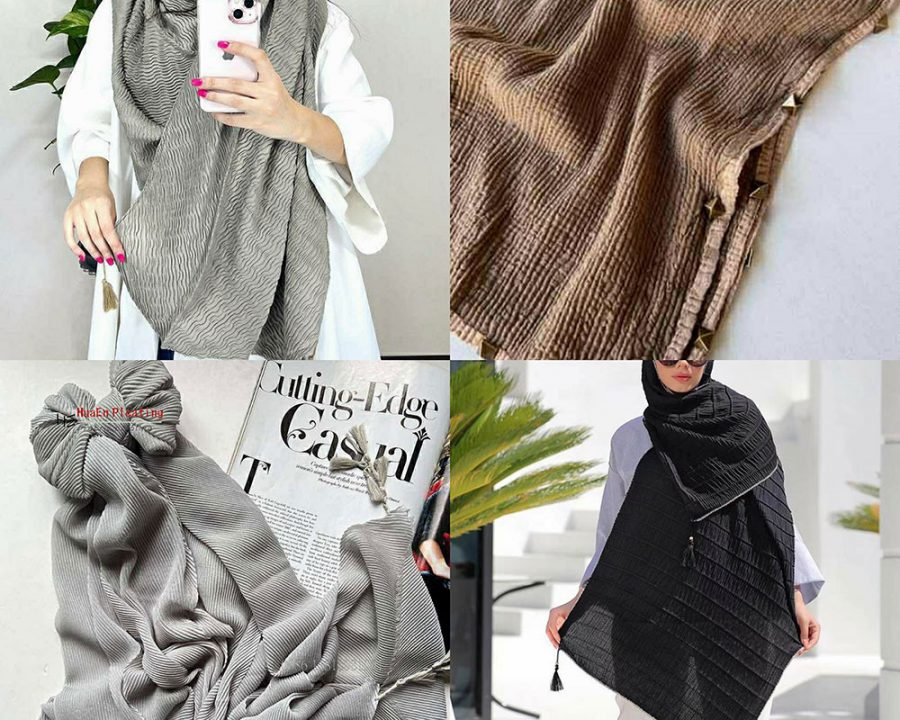
Another key operational difference between the two series is their application focus. The ZJ series is optimized for factories prioritizing volume, versatility, and stronger pleat structures, while the HE series is designed for businesses emphasizing delicate appearance and luxury-level detail. In daily factory use, this means ZJ machines are often chosen for large-scale fashion production and technical fabrics, whereas HE machines are preferred for premium garments requiring softer and more refined pleat effects. Maintenance and operational management also differ between the two series. The ZJ series, with its heavier mechanical structure, is built for intensive industrial use and long production cycles. It is highly durable and performs reliably under continuous workloads. The HE series, while also durable, requires more careful calibration to maintain optimal performance on delicate fabrics. Operators working with HE machines often focus more closely on temperature settings and material handling to preserve fabric quality.
Many modern textile factories use both series together to maximize operational efficiency. ZJ machines handle bulk production and heavier fabrics, while HE machines are assigned to luxury or delicate textile applications. This combination allows manufacturers to diversify their product range without compromising quality or productivity. Ultimately, the comparison between the ZJ series and HE series is not about which machine is superior overall, but rather which one better fits specific operational requirements. The ZJ series delivers strength, speed, and flexibility for high-volume manufacturing, while the HE series provides precision, smoothness,and gentle handling for delicate fabrics. Together, these two machine families offer a complete pleating solution that supports the diverse needs of modern textile and fashion production.