
Release time:September, 23, 2026 Author:admin 

Choosing the right fabric pleating machine manufacturer is an important decision for textile and garment companies planning to improve pleating quality and production efficiency. A suitable machine should match the required fabric types, pleat patterns, working width, production volume, and finished products. Before placing an order, textile buyers should carefully evaluate both the equipment and the manufacturer's technical capabilities. The first factor to consider is the manufacturer's experience in fabric pleating technology. Pleating machines are specialized textile equipment, and different pleat patterns require different mechanical structures and operating parameters. A manufacturer with long-term experience can provide more practical solutions for different fabrics and production requirements. Changzhou HuaEn Garment Machinery Factory has specialized in machine pleating since 2005, focusing on the design, development, manufacturing, and trade of pleating equipment.
Fabric compatibility is another important consideration. Different materials, such as polyester, rayon, satin, chiffon, nylon, velvet, acetate, crepe, viscose, and non-woven fabrics, have different thicknesses, elasticity, heat resistance, and forming characteristics. Before purchasing a fabric pleating machine, buyers should confirm whether the equipment can process their target fabrics and whether appropriate machine configurations can be provided for different material characteristics. Pleat pattern capability should also be evaluated before selecting a manufacturer. Modern fashion and home textile production may require many different designs, including knife pleats, box pleats, bamboo pleats, wave pleats, crystal pleats, treebark pleats, harlequin pleats, ruffles, combined pleats, and two-way pleats. A manufacturer capable of supporting multiple pleating patterns can provide greater flexibility when product designs and market requirements change.
Working width and pleat dimensions are also critical technical specifications. Textile buyers should determine the maximum fabric width required for their production and identify the desired pleat width and depth. For example, manufacturers producing large curtains or decorative textiles may require different equipment from companies producing narrow fashion accessories. Confirming these parameters before purchase helps ensure that the machine can meet actual production requirements. Production efficiency is another key factor. For commercial textile manufacturing, the pleating machine should provide stable and repeatable results during continuous operation. Consistent pleat spacing, depth, and alignment can reduce manual adjustments and minimize material waste. Buyers should therefore examine the machine's operating system, adjustment methods, production capacity, and suitability for their expected workload.
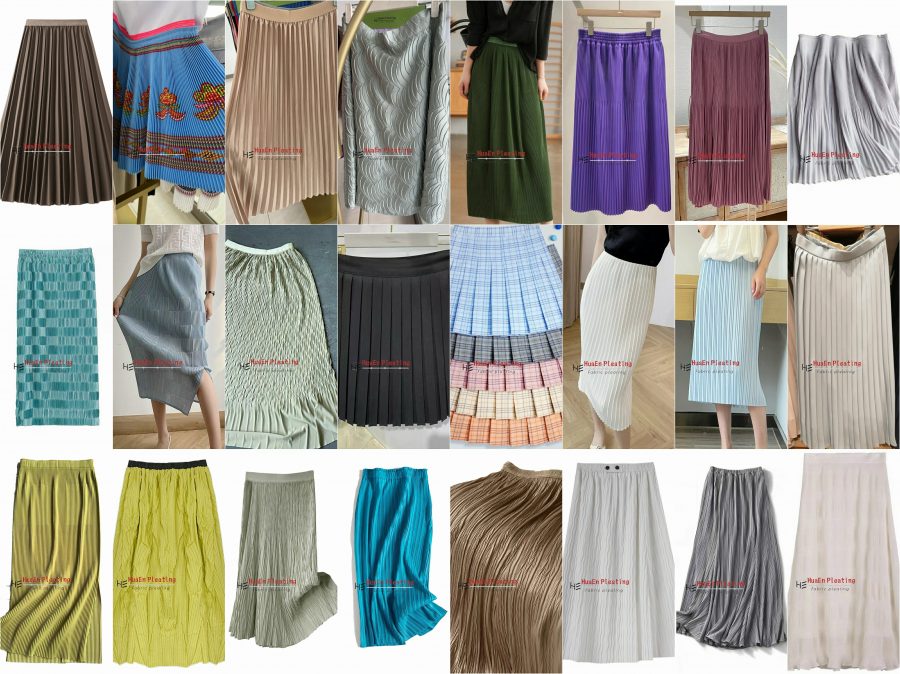
Automation and control systems can further influence machine performance. Depending on the model, modern pleating equipment can provide convenient control over parameters such as pleat size, spacing, depth, and production settings. For manufacturers producing multiple products, flexible parameter adjustment can make it easier to switch between different pleating specifications while maintaining consistent quality. Customization capability is particularly important for buyers with special production requirements. Not every textile manufacturer produces standard pleat patterns or uses standard fabric widths. HuaEn develops customized pleating solutions according to customer requirements and has experience producing machines for hundreds of different pleat patterns. This allows buyers to discuss specific applications and select a machine configuration suitable for their products.
The manufacturer's product range should also be considered. HuaEn offers ZJ and HE series pleating machines designed for different pleating applications. ZJ models include ZJ-217(C/D), ZJ-416, ZJ-316D, ZJ-516 variants, and ZJ-816, while HE models include HE-202, HE-217-B, and HE-217-T. Reviewing different machine models can help buyers identify equipment that better matches their fabric type, pleat pattern, and production requirements. After-sales support is another factor that should not be overlooked when purchasing industrial textile machinery. Installation guidance, operation instructions, spare parts availability, technical communication, and troubleshooting support can affect the long-term usability of the equipment. Buyers working with international manufacturers should also consider the supplier's export experience and ability to provide technical support across different markets.
A manufacturer's international experience can provide additional insight into its ability to handle different customer requirements. HuaEn has delivered hundreds of pleating machines to customers in Europe, Asia, the Middle East, South America, and other regions, including the UK, France, Italy, Spain, Russia, Turkey, Korea, India, Pakistan, Thailand, Vietnam, Brazil, Mexico, Peru, and other markets. Ultimately, selecting a fabric pleating machine manufacturer requires more than comparing machine prices. Textile buyers should evaluate manufacturing experience, fabric compatibility, pleat pattern capability, working width, production efficiency, control systems, customization options, machine models, and technical support. By clearly defining their production requirements and communicating them with the manufacturer, buyers can select pleating equipment that is better suited to their long-term textile production needs.