
Release time:August, 21, 2026 Author:admin 

A plain piece of fabric may look simple when it comes off the production line, but the right finishing technique can completely change its appearance and commercial value. Pleating is one of the most effective ways to add texture, movement, structure, and visual interest to fabric without changing its basic composition. With professional pleating machines, manufacturers can transform ordinary polyester, chiffon, rayon, satin, viscose, nylon, and blended fabrics into attractive materials for fashion collections, accessories, and premium garments. The value of pleating comes from its ability to create three-dimensional texture. A flat fabric has a relatively uniform surface, while pleated fabric introduces repeated folds that catch light differently as the material moves. This creates depth and visual rhythm that can make a relatively simple textile look much more sophisticated. Designers can use this effect to create skirts with movement, dresses with flowing silhouettes, textured abayas, pleated scarves, elegant kaftans, and many other fashion products.
Different pleat patterns can also completely change the character of the same fabric. Knife pleats can create a clean and structured appearance, while wave pleats provide softer movement. Crystal pleats add a distinctive geometric texture, and bamboo or treebark-style pleats can create a more artistic surface. This variety allows fashion manufacturers to take one basic fabric and develop several different product styles, giving designers greater creative freedom without necessarily changing the underlying material. Professional pleating machines make this transformation possible on a commercial scale. Manual pleating can be useful for small artistic projects, but it becomes difficult to maintain consistent spacing and depth when hundreds or thousands of meters of fabric need to be processed. A machine provides controlled feeding, pressure, and heat-setting, helping manufacturers achieve repeatable results across larger production quantities.
For example, a simple polyester fabric can be transformed into a commercially attractive pleated skirt or dress using the appropriate machine and pleat pattern. Polyester is particularly suitable for heat-set pleating because its structure allows pleats to be fixed effectively. With consistent processing, the finished fabric can retain its folds while maintaining the lightweight characteristics that make it suitable for modern fashion. The same principle applies to lightweight fabrics such as chiffon and satin. These materials already have an elegant appearance, but pleating adds another dimension to their visual appeal. Carefully controlled pleating can give a chiffon scarf more texture and movement or turn satin fabric into a sophisticated material for eveningwear. Machines such as the HE-202 are particularly useful where delicate fabric handling and soft pleat finishes are important.
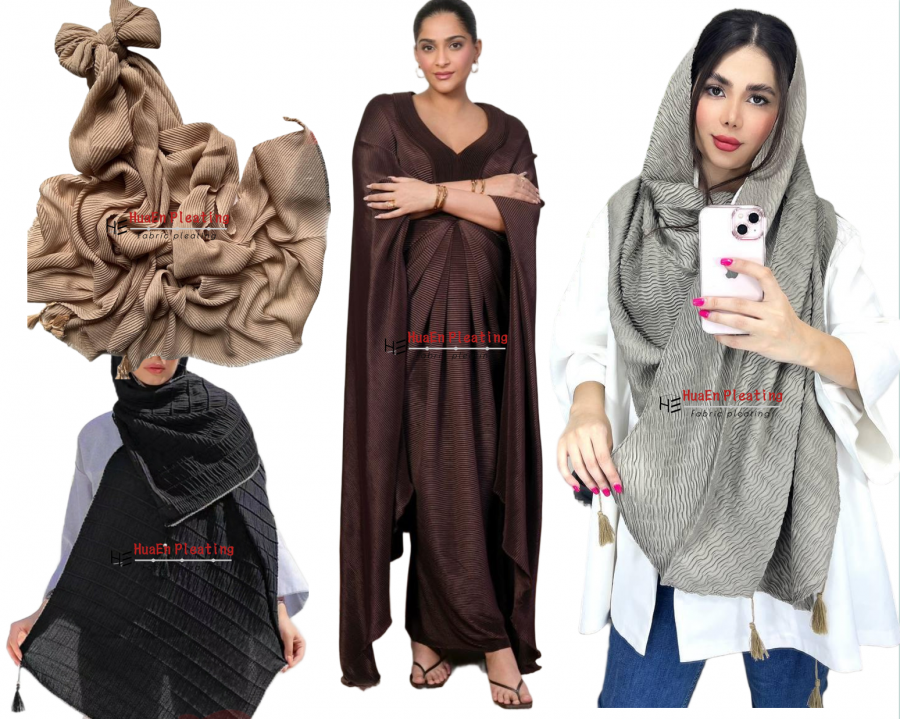
For manufacturers working with larger production volumes, the ZJ series provides a broader solution for developing and producing different pleated products. Models including the ZJ-217(C/D), ZJ-316D, can support different production requirements and pleat applications. This allows factories to move beyond basic fabric processing and develop finished textile products with greater commercial value. Pleating can also help fashion companies differentiate themselves in crowded markets. Many manufacturers may use similar base fabrics, but the final appearance can be significantly different depending on the pleating technique. A plain polyester fabric, for example, can become a distinctive pleated abaya, skirt, dress, scarf, or decorative textile. This gives brands an opportunity to create recognizable textures and silhouettes without depending entirely on expensive specialty fabrics.
Another advantage is the ability to produce customized designs. Fashion brands increasingly release limited collections and seasonal products that require unusual textures and distinctive details. Pleating machines allow manufacturers to experiment with different patterns and fabric combinations during sampling before moving into larger production. This makes it easier to respond to changing fashion trends and develop products that stand apart from standard garments. Pleated fabric can also increase the perceived quality of a product. Consumers often associate detailed texture and carefully finished folds with craftsmanship and premium design. When pleats are consistent and properly formed, they can make an otherwise simple garment appear more refined. This creates opportunities for manufacturers to move products into higher-value market segments without relying solely on expensive raw materials.
Beyond clothing, pleating adds value to scarves, shawls, stoles, hijabs, curtains, bedding, decorative textiles, and other products. This versatility allows textile manufacturers to expand into new applications and make better use of their existing fabric resources. A factory equipped with suitable pleating machinery can therefore serve multiple markets instead of depending on one garment category. Ultimately, pleating technology demonstrates that adding value to fabric does not always require a completely new material. Through controlled pattern formation, heat-setting, and precise machine operation, manufacturers can turn relatively simple textiles into visually distinctive products with greater design appeal. For modern fashion businesses, professional pleating machines provide a practical way to combine creativity with production efficiency, helping ordinary fabrics become commercially valuable fashion materials.