
Release time:September, 29, 2026 Author:admin 

Choosing the right fabric pleating machine is essential for textile manufacturers that need consistent pleat quality, efficient production, and flexibility across different fabric types. Since different pleat patterns require different forming methods and machine configurations, buyers should understand their production requirements before selecting equipment. A suitable pleating machine can help manufacturers achieve accurate results while reducing manual work and production adjustments. The first step is to identify the pleat pattern required for the finished product. Common fabric pleats include knife pleats, side pleats, box pleats, bamboo pleats, wave pleats, crystal pleats, sunray pleats, accordion pleats, ruffles, and two-way pleats. Each pattern creates a different visual effect and may require a specific machine structure or configuration. Therefore, buyers should select the machine according to the actual pleating design rather than simply choosing a general-purpose model.
Knife and flat pleats are commonly used for skirts, dresses, uniforms, scarves, and other fashion products. These pleats require accurate spacing and consistent depth throughout the fabric. When purchasing a machine for this type of application, manufacturers should pay attention to the adjustment range for pleat width and depth. Stable feeding and precise forming are also important for maintaining a uniform appearance during continuous production. Box pleats and combined pleats require more structured folding patterns. They are frequently used in garments, decorative textiles, curtains, and other products where a defined three-dimensional appearance is required. For these applications, buyers should discuss the desired pleat dimensions and folding sequence with the machine manufacturer. A machine that can accommodate different configurations can provide greater flexibility for producing multiple designs.
Sunray and accordion pleats have different characteristics from traditional straight pleats. Sunray pleats generally radiate from a narrow point and expand toward the wider section of the fabric, while accordion pleats consist of repeated folds with relatively regular spacing. These patterns are widely used for skirts, dresses, scarves, curtains, and decorative fabrics. Selecting equipment designed for the required pattern can help improve pleat consistency and production efficiency. Crystal pleats, wave pleats, treebark pleats, and harlequin pleats can create more distinctive textures and visual effects. These designs are often used when textile manufacturers want to develop differentiated fashion or decorative products. Because these patterns may require specific folding arrangements, buyers should provide samples or detailed specifications to the manufacturer before ordering a machine. This allows the manufacturer to recommend an appropriate machine configuration.
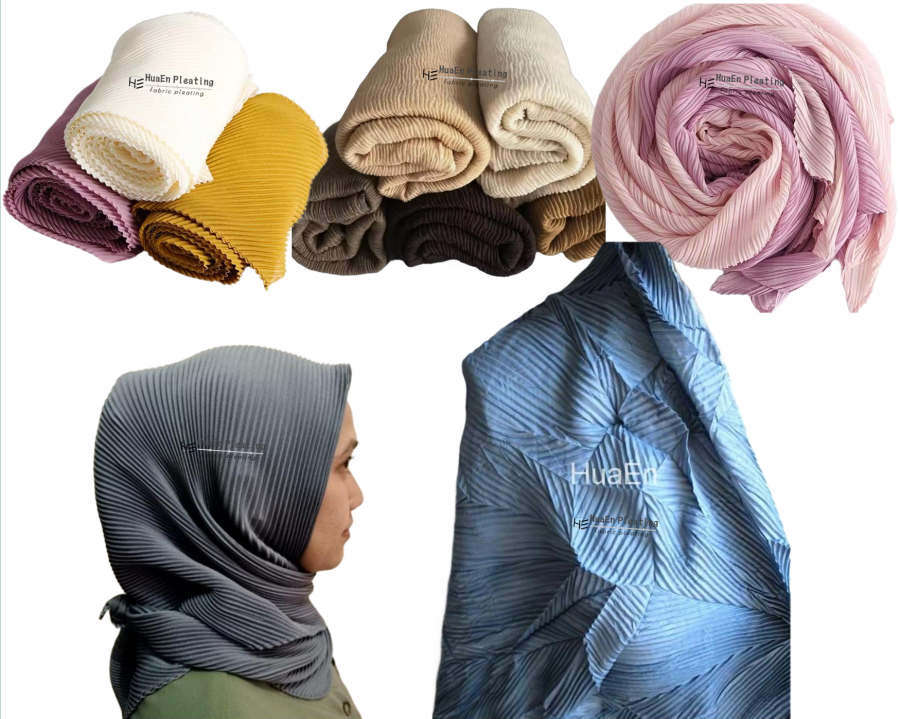
Fabric type is another important factor when selecting a pleating machine. Materials such as polyester, rayon, satin, chiffon, nylon, velvet, acetate, crepe, viscose, and non-woven fabrics can behave differently during pleating. Fabric thickness, elasticity, surface characteristics, and heat sensitivity can influence the final result. A professional pleating machine manufacturer should be able to discuss suitable settings and configurations according to the material being processed. Production width should also be considered. Different products may require different working widths, from narrow fabrics used for scarves and accessories to wider materials used for curtains, bedding, and decorative textiles. Before purchasing a machine, buyers should confirm the maximum fabric width required for their production and ensure that the selected equipment can accommodate it without limiting future applications.
Production volume is another key consideration. A small textile workshop may have different requirements from a large garment or fabric manufacturer producing continuous orders. Buyers should evaluate machine operating speed, production stability, adjustment convenience, and expected working hours. Choosing equipment according to actual production requirements can help maintain consistent output while avoiding unnecessary investment in features that may not be needed. Changzhou HuaEn Garment Machinery Factory has specialized in machine pleating since 2005. The company integrates design, development, manufacturing, and trade, with experience in producing pleating machines for a wide variety of textile applications. Its ZJ and HE series machines are designed for different pleating requirements and can be customized according to customer specifications.
HuaEn's pleating machines can support numerous pleat patterns, including knife, side, sleeping, flat, box, bamboo, wave, crystal, treebark, harlequin, ruffles, jacquard, combined, and two-way pleats. ZJ series models include ZJ-217(C/D), ZJ-416, ZJ-316D, ZJ-516 variants, and ZJ-816, while HE series models include HE-202, HE-217-B, and HE-217-T. The appropriate model can be selected according to the required pattern, material, fabric width, and production application. Ultimately, choosing the right fabric pleating machine starts with understanding the relationship between the pleat pattern, fabric characteristics, working width, and production requirements. Textile buyers should provide clear information about their target fabric and finished product when communicating with a manufacturer. By selecting equipment based on these practical factors, manufacturers can achieve more consistent pleating results and develop a wider range of fashion and decorative textile products.