
Release time:August, 07, 2026 Author:admin 

Pleated skirts and dresses have become a major category in modern fashion, from elegant evening wear and luxury collections to everyday fashion and modest apparel. As demand for pleated garments continues to grow, manufacturers face increasing pressure to produce larger quantities while maintaining consistent quality. For factories handling high-volume orders, choosing the right pleating equipment is essential to improving efficiency, reducing production issues, and meeting customer expectations. The ZJ-416 pleating machine provides an effective solution for garment manufacturers looking to achieve stable and efficient pleating performance in large-scale skirt and dress production. One of the biggest advantages of the ZJ-416 is its ability to maintain consistent pleat quality during long production runs. Skirts and dresses often require pleats that are visually uniform because any variation in spacing, depth, or alignment can directly affect the final appearance of the garment. When producing hundreds or thousands of pieces, manual adjustments can create differences between batches. The ZJ-416 is designed with a stable pleating structure that helps ensure each section of fabric receives consistent treatment, allowing manufacturers to achieve the same pleat appearance across an entire order.
High-volume skirt and dress manufacturing requires machines that can operate continuously without frequent interruptions. The ZJ-416 is built for industrial production environments where reliability and productivity are important. Its durable mechanical construction allows it to handle extended working hours while maintaining stable performance. This makes it suitable for garment factories producing seasonal collections, export orders, and large-scale fashion programs that require dependable equipment. Another important advantage of the ZJ-416 is its versatility in handling different fabrics commonly used in skirts and dresses. Modern fashion manufacturers work with a wide range of materials, including polyester, chiffon, satin, rayon, viscose, and blended fabrics. Each material has different characteristics and requires proper control during pleating. The ZJ-416 provides the flexibility needed to process various fabric types while maintaining accurate pleat formation. This allows manufacturers to expand their product range without investing in multiple specialized machines.
The machine also supports the production of various pleat styles that are popular in contemporary fashion. Designers frequently use knife pleats, wave pleats, crystal pleats, bamboo pleats, and other decorative patterns to create unique garment textures. The ZJ-416 enables manufacturers to produce these different effects with reliable consistency, helping fashion brands develop more diverse skirt and dress collections. This flexibility is especially valuable for factories serving multiple customers with different design requirements. Fabric feeding accuracy is another key factor behind the ZJ-416’s performance in high-volume garment production. Long skirt panels and dress fabrics require precise alignment throughout the pleating process. Any shifting during operation can lead to uneven patterns or wasted material. The ZJ-416 helps maintain smooth fabric movement and stable tension, reducing the risk of pleat distortion and improving overall production accuracy.
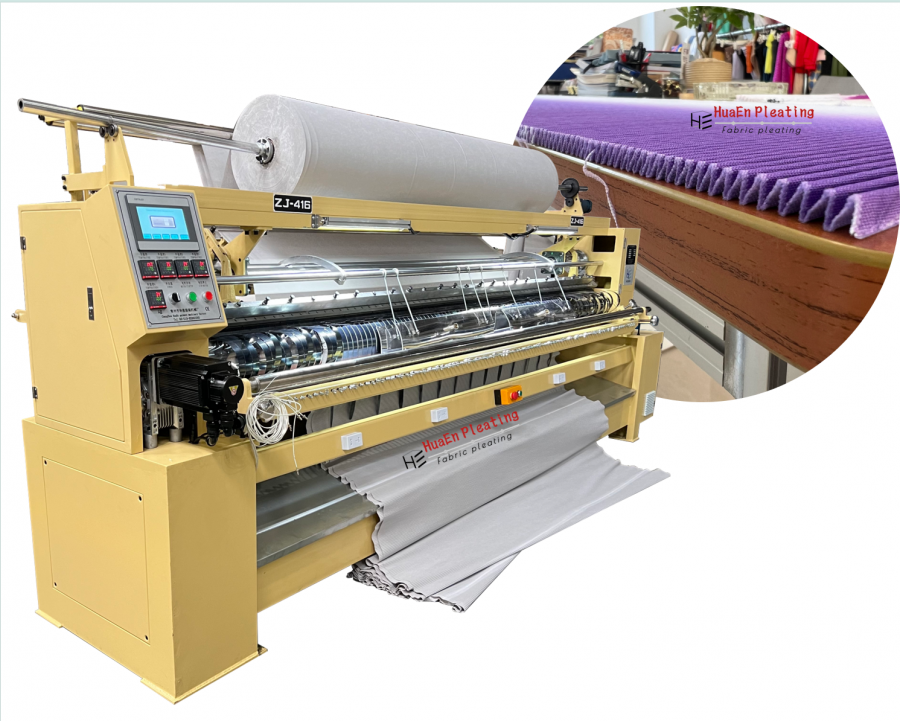
In addition to improving quality, the ZJ-416 helps manufacturers increase production efficiency. Faster and more stable pleating processes allow factories to complete larger orders within shorter timeframes. This is particularly important in the fashion industry, where seasonal collections often have strict deadlines. By improving workflow and reducing production delays, the machine helps manufacturers respond more quickly to market demands. Reducing material waste is another benefit of using the ZJ-416 for skirt and dress production. Fabrics used for fashion garments can represent a significant portion of production costs, especially premium materials such as satin, chiffon, and specialty polyester fabrics. Inconsistent pleating can result in rejected sections and unnecessary waste. The ZJ-416’s precise operation helps minimize defects, allowing factories to maximize fabric utilization and improve cost efficiency.
The machine is also valuable for manufacturers producing garments for international markets. Overseas buyers often require strict consistency between approved samples and final production batches. A pleated skirt or dress collection must maintain the same appearance across every piece, regardless of production quantity. The stable performance of the ZJ-416 helps manufacturers meet these requirements and build stronger relationships with global fashion brands. For growing garment factories, investing in reliable pleating equipment is also a way to increase production capability. As customer orders expand, manufacturers need machines that can support higher output without sacrificing quality. The ZJ-416 provides the production capacity and flexibility required for business growth, allowing factories to take on larger projects with confidence.
Overall, the ZJ-416 pleating machine offers significant advantages for high-volume skirt and dress manufacturing. Its combination of consistent pleating quality, fabric versatility, reliable operation, and efficient production performance makes it a valuable choice for modern garment factories. By helping manufacturers produce attractive, uniform, and high-quality pleated garments at scale, the ZJ-416 supports fashion businesses in meeting customer expectations and competing effectively in the global apparel market.