
Release time:September, 08, 2026 Author:admin 

At first glance, fabric folding and fabric pleating may appear to be almost the same process. Both involve creating folds in textile materials, but their purposes and technical requirements are quite different. Standard folding equipment is generally intended to fold or position fabric for handling, storage, cutting, or basic processing. A professional pleating machine, on the other hand, is designed to create a specific, repeatable pattern that becomes an important part of the finished textile product. For garment manufacturers producing skirts, dresses, abayas, scarves, curtains, and other pleated products, this difference is significant. The first major difference is pattern precision. Standard folding equipment may create a simple fold, but professional pleating machines are designed to produce carefully controlled patterns with consistent spacing and depth. Depending on the machine and configuration, manufacturers can create knife pleats, box pleats, wave pleats, crystal pleats, bamboo pleats, treebark pleats, combined pleats, and other decorative effects. The accuracy of these folds directly influences the appearance of the finished garment, making precision essential rather than optional.
A professional pleating machine also provides much greater control over fabric movement. During production, fabric needs to travel through the machine at a controlled and consistent rate. If the material shifts, stretches, or develops uneven tension, the resulting pleats may become irregular. Professional equipment incorporates mechanisms specifically designed to guide fabric through the pleating process, helping maintain alignment across long production runs. Standard folding equipment generally does not need this same level of precision because its primary purpose is simply to create or manage a fold. Another important distinction is heat-setting capability. Many synthetic fabrics rely on controlled heat to permanently establish pleat shapes. Polyester, nylon, rayon blends, and other heat-responsive textiles can retain pleats when processed under suitable temperature conditions. A professional pleating machine combines mechanical folding with controlled heating, allowing manufacturers to create pleats that remain stable after production. Ordinary fabric folding equipment may fold material temporarily but does not necessarily provide the heating and setting process required for durable pleats.
Temperature control becomes particularly important when manufacturers work with different fabric types. Chiffon, satin, polyester, viscose, nylon, velvet, and blended fabrics have different reactions to heat and pressure. Too much heat can affect fabric appearance, while insufficient heat may produce weak pleat retention. Professional pleating equipment allows operators to adjust the production process according to the material, helping balance pleat durability with fabric quality. Pressure control is another major difference. Creating a clean and consistent pleat requires controlled pressure across the fabric. Excessive pressure may flatten delicate materials or leave unwanted marks, while insufficient pressure can result in poorly defined folds. Professional machines are engineered specifically around this requirement. This is particularly important for delicate fashion fabrics where maintaining softness and natural drape is just as important as creating the pleat itself.
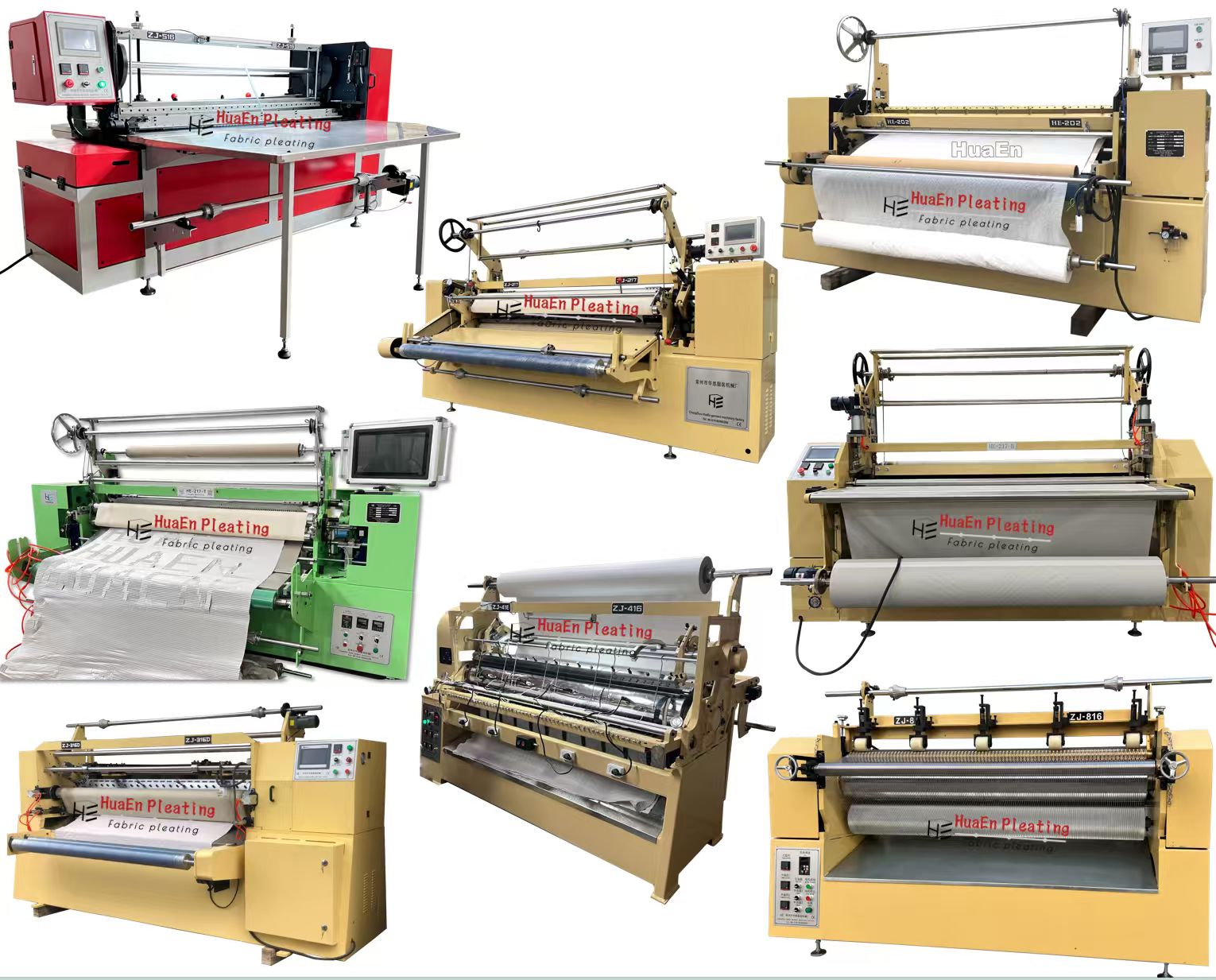
Professional pleating machines are also designed for continuous production. A garment factory may need to process hundreds or thousands of meters of fabric for one order. The equipment therefore needs to maintain stable performance over extended operating periods. HuaEn's ZJ series, including models such as the ZJ-217(C/D), ZJ-316D, ZJ-416, ZJ-516 series, and ZJ-816, is developed for different production requirements and pleating applications. The HE series, including the HE-202, HE-217-B, and HE-217-T, provides additional options for manufacturers working with particular fabric and design requirements. Another difference is design flexibility. Standard folding equipment generally performs a limited number of basic folding operations. A professional pleating machine can support a much broader range of decorative patterns. This flexibility gives fashion manufacturers the ability to develop different collections using the same production equipment. A factory can produce finely pleated skirts for one customer, textured dresses for another, and decorative scarves or home textiles for a third, depending on its machine configuration and production requirements.
Consistency is especially important when supplying international garment buyers. A manually folded or inconsistently processed fabric may look acceptable in a single sample but become noticeably different when produced in large quantities. Professional pleating machinery helps reproduce the same pattern throughout a production batch. This repeatability allows manufacturers to match approved samples more closely and reduce quality problems. There is also a difference in production value. Folding is usually an intermediate handling operation, whereas pleating can become a value-adding finishing process. A plain piece of polyester or chiffon can be transformed into a textured material with significantly different visual characteristics after professional pleating. The resulting fabric may then be used in premium skirts, dresses, abayas, scarves, kaftans, curtains, bedding, and decorative products.
For manufacturers deciding between basic folding equipment and professional pleating machinery, the right choice ultimately depends on the intended application. If fabric simply needs to be folded for handling or storage, standard equipment may be sufficient. If the objective is to create permanent, precise, repeatable decorative pleats for commercial textile production, a dedicated pleating machine is a much more suitable solution. The key difference is therefore not simply that one machine folds fabric and the other does not. A professional pleating machine combines controlled fabric feeding, precise pattern formation, pressure management, heat-setting, repeatability, and continuous production capability into one process. That combination allows manufacturers to turn flat fabric into consistently finished pleated material while maintaining the quality and appearance demanded by modern fashion and textile markets.