Release time:April, 24, 2026 Author:admin 

Choosing between the ZJ-217(C/D) and the ZJ-316D pleating machines is not about which one is “better” overall—it’s about which one fits your production scale, workflow, and business stage. Both machines are highly capable, but they are designed to serve different operational needs, especially when comparing small production studios with medium-sized factories. The ZJ-217(C/D) is widely regarded as an ideal machine for small-scale production and flexible workshop environments. It is known for its versatility, allowing operators to create a wide range of pleat patterns simply by changing blades or adjusting settings. From knife pleats and box pleats to wave and bamboo designs, the machine supports creative experimentation without complex setup. This makes it especially suitable for boutique manufacturers, sampling rooms, and startup fashion brands that frequently work on customized or short-run orders.
Another key advantage of the ZJ-217(C/D) is its simplicity and adaptability. The D-type version offers more manual control, while the C-type introduces computerized features for better repeatability. This flexibility allows businesses to choose based on budget and technical preference. For small teams, the machine is easy to operate, requires less training, and involves lower initial investment. It also supports a wide range of fabrics—from chiffon and satin to polyester blends—making it a practical all-in-one solution for designers who prioritize variety over volume. In contrast, the ZJ-316D is designed with medium-scale production and higher efficiency in mind. It is a fully computerized pleating machine that allows operators to digitally control pleat width, depth, spacing, and pattern combinations. This level of automation significantly reduces manual intervention and ensures consistent results across large batches. For growing factories, this is a major advantage, as it minimizes human error and improves overall production stability.
The ZJ-316D also stands out for its higher productivity and scalability. With capabilities such as wide pleating widths and speeds reaching around 100 meters per hour, it is built to handle continuous production efficiently. This makes it particularly suitable for manufacturers supplying export markets or handling repeat bulk orders. Its ability to store multiple pleat patterns digitally also allows quick switching between designs, which is essential in a fast-paced production environment. Another important difference lies in design complexity and repeatability. While the ZJ-217(C/D) is excellent for creative and flexible work, the ZJ-316D excels in producing complex and highly consistent patterns such as wave, umbrella, and decorative pleats. For medium-sized factories that need to deliver identical products across hundreds or thousands of meters of fabric, this precision becomes critical.
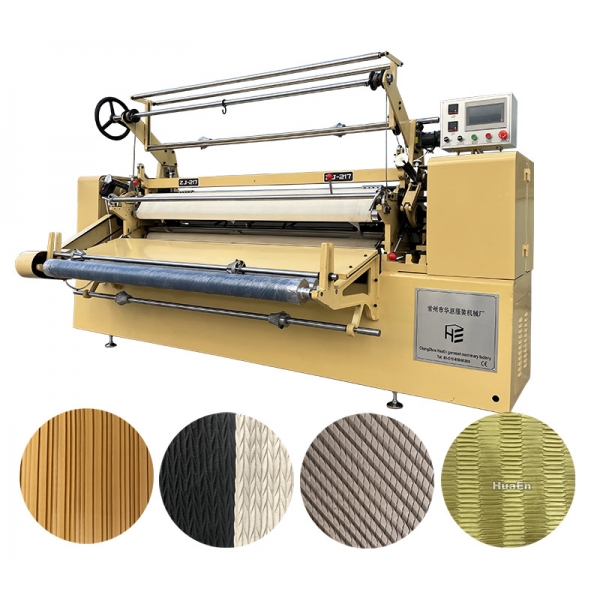
From an operational perspective, the ZJ-217(C/D) is more hands-on and artisan-friendly, making it ideal for designers who prefer direct control and frequent adjustments. On the other hand, the ZJ-316D is more automation-driven, reducing dependence on operator skill and allowing for smoother workflow in structured production lines. This difference reflects the typical transition businesses go through as they scale from creative studios to organized manufacturing units. Cost and investment also play a role in decision-making. The ZJ-217(C/D) generally requires a lower initial investment and has simpler maintenance, making it accessible for startups. The ZJ-316D, while more expensive, offers higher long-term efficiency and output, making it a strategic investment for businesses aiming to expand production capacity.
Ultimately, the ZJ-217(C/D) is better suited for small production, where flexibility, creativity, and cost control are priorities. The ZJ-316D, on the other hand, is the better choice for medium production, where efficiency, automation, and consistency become essential. Many manufacturers begin with the ZJ-217(C/D) and later upgrade to the ZJ-316D as their business grows. Both machines play important roles at different stages of development. The ZJ-217(C/D) supports innovation and design exploration, while the ZJ-316D enables scaling and industrial efficiency. Choosing the right one depends on where your business stands today—and where you plan to go next.